

Many people look for side hustles to earn extra money, gain new skills, or build a small business that fits their lifestyle. Whether someone lives in a college town or a small town, finding the right side hustle can make a big difference in their income and schedule. Side hustles that work in college towns often focus on serving students’ specific needs, while those in small towns usually tap into community services and local resources.
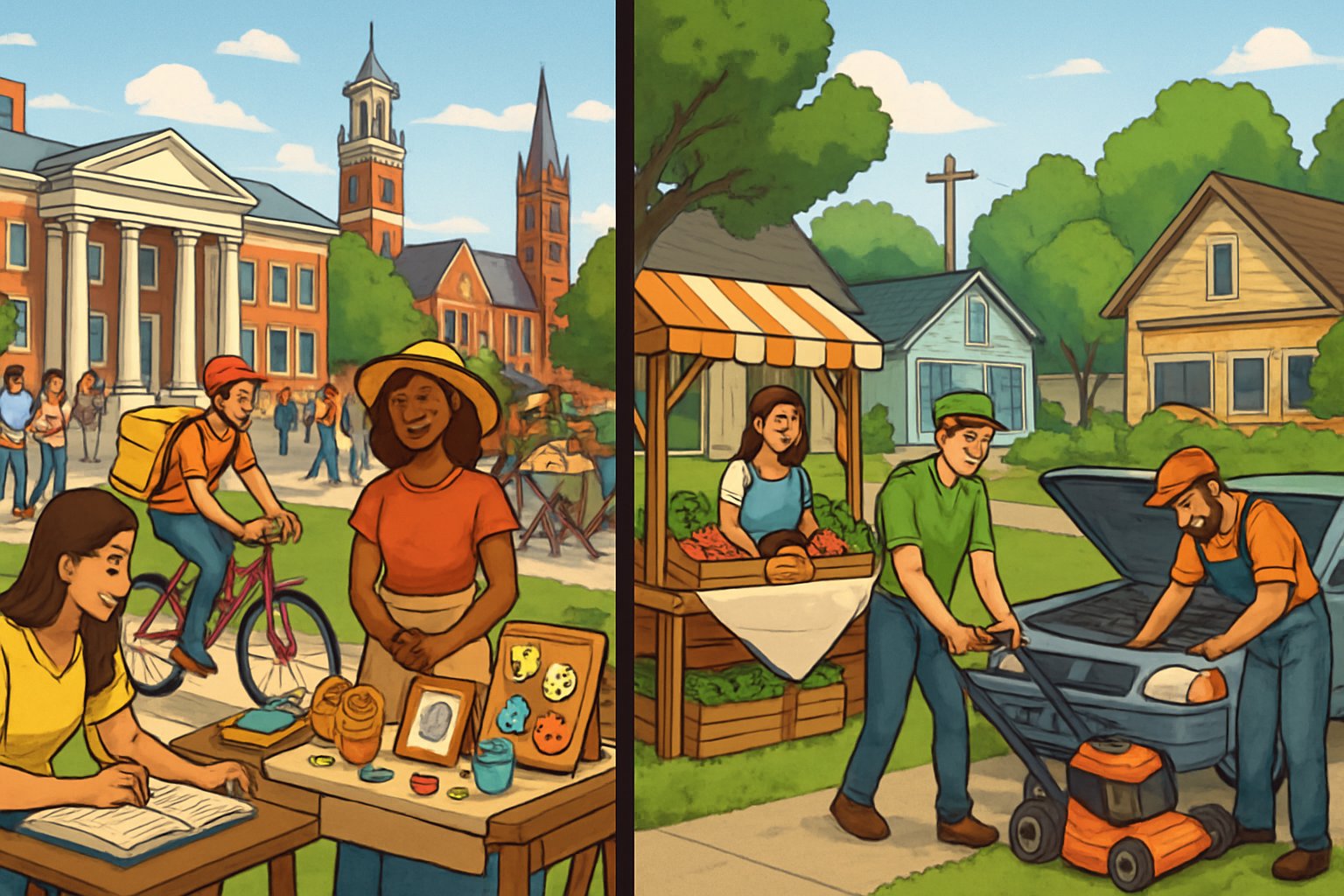
In college towns, side hustles like tutoring, phone repairs, or meal prep cater to busy students who want convenience and budget-friendly options. For example, offering bike rentals or dorm cleaning can fill common student needs. Small towns, on the other hand, often succeed with side hustles like landscaping, pet sitting, or handyman services that meet everyday local demands. Many small town residents appreciate hiring neighbors for help with property maintenance or errands.
Choosing a successful side hustle means understanding the community. A bike repair shop thrives near a large campus, but a car rental might not work as well in a small town where many people already own cars. Practical side hustles in both places share one thing—they serve real, local needs with simple services and low startup costs.
What Is Side Hustles That Work in College Towns vs Small Towns?
Side hustles in college towns and small towns differ mainly because of the local demand, population, and lifestyle. College towns have many students, so flexible jobs like tutoring, dog walking, or freelance work fit well. These jobs work because students often need extra cash and prefer flexible hours.
In small towns, side hustles tend to focus more on community needs. For example, starting a coffee shop can work well if it becomes a local hangout spot. People in small towns often look for places to connect, so a coffee shop can bring steady income and build community ties.
Some side hustles work in both places but need adjustments. For instance, tour guide businesses thrive in college towns with tourists and historical sites. In small towns, simple services like yard work or home cleaning meet steady demand and often require less competition.
Here is an overview of side hustle ideas for each setting:
| College Towns | Small Towns |
|---|---|
| Tutoring | Coffee Shop |
| Freelancing | Small Business (auto detailing, landscaping) |
| Dog Walking | Local Tour Guide |
| Moving Services (student moves) | Selling homemade crafts |
| Bartending or food delivery | Airbnb hosting (if tourists visit) |
For small towns, it’s key to start with what the community needs most. They can also promote small ventures by joining local markets or villages fairs. In college towns, tapping into the seasonal flow of students with online gigs or academic help is often a good plan.
Why Side Hustles That Work in College Towns vs Small Towns Works in Small Towns
Side hustles that thrive in college towns often fit well in small towns because both places have strong community ties and steady demand for certain services. For example, tutoring works well in both areas since students and residents seek extra help with learning.
Many side hustles like dog walking, lawn care, and cleaning are needed in small towns just as much as in college areas. In small towns, people may lack easy access to these services, which creates good opportunities.
Flexibility is key in both settings. For instance, driving for rideshare apps or freelancing can fit into varied schedules. Small town residents often appreciate side hustles that adapt to local life rhythms, like weekend markets for selling crafts or hosting local tours.
Practical tips for small towns:
- Focus on personal connections to gain regular clients; word-of-mouth is powerful.
- Offer customized services, like local produce delivery or home cleaning.
- Use local events or markets to promote side hustles such as handmade goods or food stands.
A small town example is starting a home cleaning business, which often costs little to begin but meets a real need. Likewise, becoming an Airbnb host can work well in towns that attract visitors for nature or local culture.
The blend of steady demand and community trust makes many side hustles successful in small towns when approached with creativity and local knowledge.
Startup Costs and Basic Requirements
Starting a side hustle in a college town usually means focusing on low startup costs. Many businesses require under $500 to begin. For example, a cell phone repair service needs basic tools and replacement parts. Learning repair skills online can reduce costs further.
In small towns, startup costs can vary more. A thrift shop or moving service may need more money upfront for inventory or equipment. However, lower rent and cheaper supplies often balance these expenses.
Some side hustles require special licenses or certifications. For example, personal training needs certification, and meal prep businesses may require health permits. It’s best to check local rules before investing.
A simple table outlines common needs:
| Business Type | Typical Startup Cost | Key Requirements |
|---|---|---|
| Cell Phone Repair | $100 – $300 | Tools, parts, repair skills |
| Personal Training | $500+ | Certification, gym space |
| Thrift Shop | $1,000+ | Inventory, retail location |
| Bike Rental | $500 – $2,000 | Bikes, storage space |
In small towns, community connections help reduce costs. Someone starting a moving business might borrow a truck. A bike rental operator could begin with used bikes bought directly from residents.
Planning for startup costs and local rules helps entrepreneurs succeed in both college and small towns.
How to Get Customers in a Small Town
In a small town, building trust is key. People often rely on word-of-mouth and personal recommendations. Encouraging happy customers to share their experiences with friends and family can quickly grow a side hustle’s reputation.
Using local spaces like community centers, libraries, or markets to promote services works well. Flyers, bulletin boards, and local event sponsorships can attract attention. For example, a person selling homemade crafts could set up a stall at the weekly market to meet buyers face-to-face.
Social media also plays an important role. Creating a simple business page on platforms like Facebook or Instagram helps reach locals. Posting photos, sharing updates, and responding quickly makes potential customers feel connected.
Offering special deals or discounts to first-time customers can encourage people to try the service. If someone starts a lawn care business, for example, a discount on the first job may lead to repeat clients.
Local partnerships can boost visibility. Working with other small businesses, like a café or a tour guide collaborating with a local shop, opens up new customer groups.
A clear and friendly approach works best. Small towns value honesty and good service, so consistently meeting these expectations attracts steady business.
Challenges and Things to Watch Out For
Side hustles in college towns often face high competition. Many students offer similar services like tutoring, ridesharing, or food delivery. This can lower earnings and make it harder to stand out. To deal with this, individuals should focus on niche skills or unique services that are less common.
In small towns, the customer base is smaller. This limits the number of potential clients, so hustlers must build strong local relationships. For example, a pet sitter might gain repeat customers by offering personalized care or flexible hours tailored to neighbors’ needs.
Both areas require attention to time management. Balancing school and work is tough. Students should set clear schedules and avoid overcommitting. Using apps to organize tasks can help keep side jobs from interfering with studies.
Legal considerations are important in all locations. Hustlers should check if they need licenses or permits, especially for services like food sales or driving. Small towns might have fewer rules, but overlooking them risks fines.
Here’s a quick look:
| Challenge | College Towns | Small Towns | Tip |
|---|---|---|---|
| Competition | High | Low to moderate | Identify niche markets |
| Customer Base | Large but busy | Small and close-knit | Build personal trust |
| Scheduling | Difficult due to busy campus life | Less hectic but fewer jobs | Use a planner or calendar |
| Legal & Permits | Often strict | Varies, sometimes informal | Verify local regulations |
Awareness of these challenges helps students build side hustles that last and serve their communities well.
Tips to Maximize Success
To succeed in side hustles in both college towns and small towns, it is important to focus on building strong local connections. Networking with neighbors, local businesses, and community groups increases trust and brings repeat customers.
Consistency matters. Keeping a regular schedule helps clients know when services are available. For example, a tutor in a college town should set fixed hours, while a lawn care service in a small town can schedule weekly visits.
Marketing should be simple and direct. Using social media groups or community bulletin boards is cost-effective. A small-town craft seller might post photos in local Facebook groups, while a college student could join campus groups to advertise tutoring or delivery services.
Quality service encourages good reviews and word-of-mouth. This can be more powerful than paid ads in tight-knit communities. For instance, an Airbnb host in a small town benefits from guests sharing positive experiences with friends.
Flexibility is key. Side hustles should adapt to customer needs, such as adjusting delivery hours for busy students or offering seasonal yard work in a small town.
| Tip | Example in Small Town | Example in College Town |
|---|---|---|
| Network locally | Partner with local farmers market | Connect with student clubs |
| Maintain schedule | Weekly lawn care | Evening tutoring sessions |
| Market efficiently | Post on town Facebook group | Use campus social media |
| Prioritize quality | Encourage customer reviews | Ask for student referrals |
| Stay flexible | Offer seasonal services | Adjust hours during exams |
Why Side Hustles That Work in College Towns vs Small Towns Will Stay Relevant
Side hustles in college towns and small towns remain relevant because both rely on local needs and steady demand.
College towns have a constant flow of students and staff who often seek flexible services like tutoring, food delivery, and furniture exchange. These needs don’t go away as long as the college operates.
Small towns focus more on essential services that keep the community running. Side hustles like junk removal, lawn care, and handyman work fit well here. These jobs serve everyday life and tend to have less competition.
For example, someone in a small town of 19,000 might start a junk removal service using their own truck, keeping startup costs low and earning steady income. In a college town, a student might tutor peers online or deliver groceries, taking advantage of the nearby population.
Both environments offer side hustles that require little skill and flexible hours, making them accessible.
| Town Type | Common Side Hustles | Why They Last |
|---|---|---|
| College | Tutoring, food delivery, selling items | Continuous demand from students |
| Small Town | Junk removal, lawn care, moving help | Ongoing need for local services |
Understanding local demand and focusing on simple, repeatable services helps side hustlers succeed regardless of location.
Conclusion
Side hustles in college towns often focus on services and products that fit student life. Ideas like tutoring, phone repair, or meal prep work well because students need convenience and affordability. For example, a tutoring business near a university campus can quickly attract clients during exam season.
In small towns, side hustles usually solve broader community needs. Services like lawn care, handyman work, or local delivery fill gaps where options are limited. A practical example is starting a moving service in a small town where professional movers are scarce.
Both environments require understanding the local market. In college towns, marketing on social media and campus bulletin boards helps reach students directly. In small towns, word of mouth and partnerships with local shops or community centers build trust.
Here are some quick tips for success:
- Research local demand: Identify what people need.
- Start small: Test your idea with minimal costs.
- Build relationships: Good service leads to repeat customers.
- Adapt your approach: Change offerings based on feedback.
Whether in a college or small town, flexibility and knowing the community make a side hustle sustainable. Focusing on real needs and practical solutions gives both side hustles a chance to grow steadily.